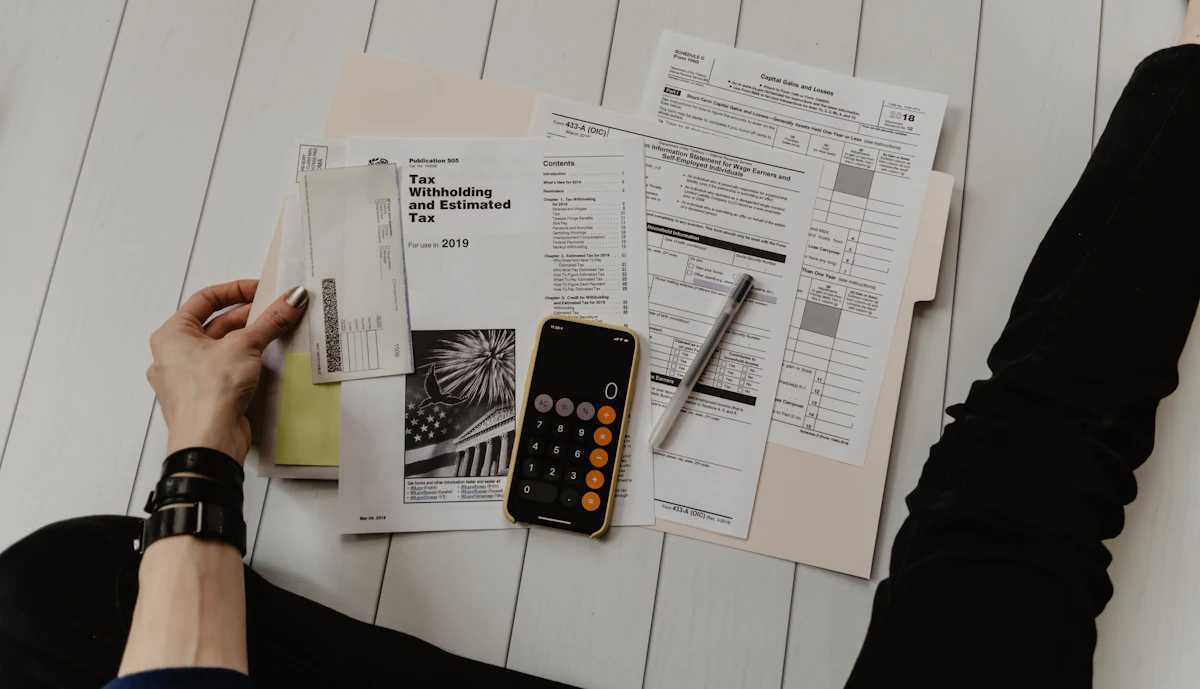
750 hours spread across a full year works out to about 14.4 hours per week, 62.5 hours per month, or roughly 36% of a full-time job (a full-time year is about 2,080 hours). If you only work on weekdays, that's just under 3 hours per workday. As a raw block of time, 750 hours equals 31.25 twenty-four-hour days. For Real Estate Professional Status under IRC Section 469(c)(7), 750 hours is the annual minimum you have to spend in real property trades or businesses you materially participate in.
Here is every way to slice it, plus what it actually feels like to hit.
750 Hours, Broken Down
| Spread over... | Comes out to |
|---|---|
| Per week (52 weeks) | ~14.4 hours/week |
| Per month (12 months) | 62.5 hours/month |
| Every calendar day (365) | ~2.05 hours/day |
| Weekdays only (~250 workdays) | ~3 hours/workday |
| As a share of full-time work (2,080 hrs/yr) | ~36% |
| As raw 24-hour days | 31.25 days |
So when someone asks "is 750 hours a lot?", the honest answer is: it's real, but it's not a second full-time job. It's a serious part-time commitment, about three hours on a typical weekday, or two solid weekend days a month plus a few evenings.
Is 750 Hours a Week, a Month, or a Year?
A year. This trips people up constantly. The 750-hour threshold is measured over your tax year, not per week or per pay period. You have all twelve months to accumulate it.
That matters because real estate work is lumpy. You might log 120 hours during a renovation in March and 20 hours in a quiet July. The IRS does not care how evenly you spread it. It cares that the total clears 750 by December 31 and that you can prove it with a contemporaneous log.
How Many Hours a Week Is 750 Hours a Year?
About 14 and a half. Precisely, 750 divided by 52 weeks is 14.42 hours, which is 14 hours and 25 minutes a week.
But "every week" is the wrong mental model, because almost nobody does real estate work in perfectly even weekly increments. A more useful way to think about it: if you take a few weeks completely off for travel or holidays and work the other 45 or so, you're looking at closer to 16 to 17 hours in the weeks you are actually working. Still very doable, especially if you self-manage or you're actively acquiring and rehabbing.
How Does 750 Hours Compare to a Full-Time Job?
A standard full-time job runs about 2,080 hours a year (40 hours a week times 52 weeks). So 750 hours is about 36% of full-time, a little over a third.
This comparison is the key to understanding the second REPS test, the one people forget. To qualify as a real estate professional, you have to clear two hurdles in the same year:
- 750 hours in real property trades or businesses, and
- More than half of all your personal-service work hours for the year in real estate.
If you have a full-time W-2 job at 2,080 hours, you would need more than 2,080 hours in real estate to clear that second test, not just 750. That's why REPS is so hard for full-time employees and far more realistic for a spouse who doesn't work outside real estate. The 750-hour math is only half the story. We break down the whole thing in our complete guide to Real Estate Professional Status.
750 Hours a Year Is How Many Days?
Two ways to read that question:
As raw time: 750 hours divided by 24 is 31.25 days. So 750 hours is just over a month of around-the-clock time, which is why it's a meaningful commitment even though it's "only" a third of full-time.
As working days: if you put in about 3 hours on a given day, 750 hours takes roughly 250 days of effort spread across the year. At 5 hours a day, it's about 150 days. At a full 8-hour day, it's about 94 days.
Pick whichever framing helps. The point is the same: 750 hours is a lot of individual sessions, which is exactly why you want to capture them as they happen instead of reconstructing them in April.
What 750 Hours Actually Looks Like
The number feels abstract until you watch real tasks pile up. Here's a single busy week for an investor who self-manages a small portfolio and is actively buying:
- Tenant messages, rent posting, and a lease renewal: 2 hrs
- On-site with a contractor for a unit turn, plus reviewing the bid: 3 hrs
- Bookkeeping and categorizing the month's expenses: 2 hrs
- Touring two properties with your agent and underwriting both: 4 hrs
- Ordering materials and scheduling the next phase of a rehab: 2 hrs
- Screening applicants and setting up a showing: 1.5 hrs
That's 14.5 hours in one week without anything dramatic happening. It lines up almost exactly with the 14.4-hour weekly average. Now stretch it across a year.
Here's what a full year can look like for an active self-manager with five units who buys one property:
| Activity | Hours/year |
|---|---|
| Tenant relations, rent, renewals (5 units) | 120 |
| Maintenance and repair coordination | 150 |
| Bookkeeping, admin, insurance, taxes | 120 |
| Acquiring 1 property (touring, underwriting, due diligence, closing) | 120 |
| Rehab and turn on the new unit (contractor oversight, materials) | 160 |
| Leasing the new unit (marketing, showings, screening) | 35 |
| One turnover on an existing unit | 55 |
| Total | 760 |
No single line is heroic. It's a few hours a week on operations, plus the natural spikes that come with buying and renovating one property. Stacked up, you clear 750 with room to spare.
The Version That Falls Short
Now flip it. Picture an owner of those same five units who hands everything to a property manager. The PM handles tenants, maintenance, leasing, and the books. The owner reviews a monthly statement, approves a big repair, and talks to the PM occasionally. That might total 60 to 120 hours a year, and a chunk of it is passive investor activity (just reviewing reports) that doesn't even count toward the 750.
That's the dividing line. Hours come from doing the work, not owning the asset. The investors who hit 750 are self-managing, actively acquiring, or running their own rehabs. The ones who don't have outsourced the very activities that generate the hours. (See what counts toward the 750 before you assume an activity qualifies.)
Don't Confuse 750 with 500
Quick but important distinction. You'll see two numbers thrown around in REPS conversations:
- 750 hours is the annual threshold to be treated as a real estate professional (the aggregate across your real property trades or businesses).
- 500 hours is one of the seven material participation tests, used to show you materially participate in a specific activity or property.
They work together but they are not the same test. You can hit 750 in total and still need to show material participation, often via the 500-hour test, on each property or grouped activity. If you have several properties, a grouping election can make this far easier.
Reframe: Every Hour You Log Is a Tax Asset
Here's the mindset shift that makes the logging actually stick. Every hour you record isn't just documentation. It's a tax asset. The same way you track improvements and revenue on a property, you're building evidence that can unlock tens or even hundreds of thousands of dollars in deductions.
So stop thinking "I have to log 750 hours." Think "future me gets paid for this." The thirty seconds you spend logging a contractor meeting today is what lets you take a six-figure paper loss against your income later. That's not busywork. That's the highest hourly rate you'll earn all year.
And remember what's actually on trial in an audit: the IRS doesn't care about your memory. It cares about evidence. A confident "I'm sure I spent way more than 750 hours" is worth nothing. A specific, dated, contemporaneous log is worth everything.
You're not just tracking time. You're writing the story of your qualification, one entry at a time.
Put a Number on It: What's a Logged Hour Worth?
Run the math on one deal. Say you buy a $500,000 rental:
- Building basis (excluding land, about 80%): $500,000 x 0.80 = $400,000
- Reclassified to short-life property by a cost segregation study (about 30%): $400,000 x 0.30 = $120,000
- With 100% bonus depreciation back and permanent, that $120,000 is deductible in year one
- At a 24% federal marginal rate (your state tax stacks on top): $120,000 x 0.24 = $28,800 in federal tax savings
Now divide by the work: $28,800 / 750 hours = $38.40 per hour, and that's before your state savings push it higher. It's also tax-free, because it's money you keep instead of sending to the IRS. In pre-tax terms that's like earning about $50 an hour at a job. In a 37% bracket on a bigger property, the same logged hour can be worth well over $100.
Here's the part that ties it back to REPS: that $30,000 only hits your pocket this year because you qualified as a real estate professional. Without REPS, the $120,000 is a passive loss, suspended until you have passive income or sell the property. Your 750 logged hours are the thing that converts a parked deduction into a live one. (Can't realistically hit 750? The short-term rental loophole clears at a lower bar. See strhours.com.)
A few honest caveats: the exact reclassification percentage comes from a real cost seg study, your land allocation will differ, and bonus depreciation gets recaptured when you sell unless you defer it. But the headline stands. Your logging hours are doing six-figure work, which is why skipping them is the most expensive shortcut in real estate.
The Realistic Way to Hit 750
Three hours a weekday sounds easy until life happens. Here's what actually gets people there:
- Self-manage your rentals. Tenant communication, maintenance coordination, and bookkeeping add up fast when you're not paying a property manager to do it.
- Be active in acquisition. Touring, underwriting, due diligence, and closing coordination are some of the heaviest hour-generators, especially in a buying year.
- Run your own rehabs. Managing contractors and construction is hours-dense and clearly a real property trade or business.
- Log it the day it happens. This is the one that separates people who keep REPS in an audit from people who lose it.
That last point is everything. A pile of 30-minute and 2-hour sessions across 250 days is impossible to remember accurately months later. That's the entire reason we built REPS Time: you log each session from your phone in a couple taps the moment it happens, and it tracks you toward 750 (and runs the more-than-half test) automatically. You can start free. However you do it, capture the hours as you go.
This article is educational and not tax or legal advice. Real Estate Professional Status depends on your specific facts and circumstances. Confirm your situation with a qualified CPA or tax advisor. References: IRC Section 469(c)(7); Treasury Regulation Section 1.469-5T(a) (material participation tests).